In late 2023, the Arts Council of England commissioned the University of Essex to do something nobody had quite done at that scale before. They wanted to find out, in real numbers, what it was actually like to be a freelancer in the creative sector. They surveyed five thousand and twenty-five of them. Theater people. Museum people. Dancers, musicians, visual artists, writers, librarians. They published the results a year later in a report that the chief executive of the Arts Council, in his own foreword, described as sobering.
The numbers are the part that does the work. Seventy-three percent of cultural freelancers reported pre-tax earnings of less than twenty-five thousand pounds a year. That is the gross number, before taxes, before equipment, before the train fare to the gig in London. Sixty-eight percent could not save anything for a work-related pension. A meaningful share of respondents reported regularly working for free, a thing the report calls, in its even academic register, donated labour. When former freelancers were asked why they had left the sector, the most common answer was money.
These are not the numbers of a difficult career. These are the numbers of a career that, for most of the people inside it, does not actually function as a career. It functions as a hobby that occasionally pays, propped up by partners and parents and credit cards and the occasional good month that you spend the next four bad months recovering from.
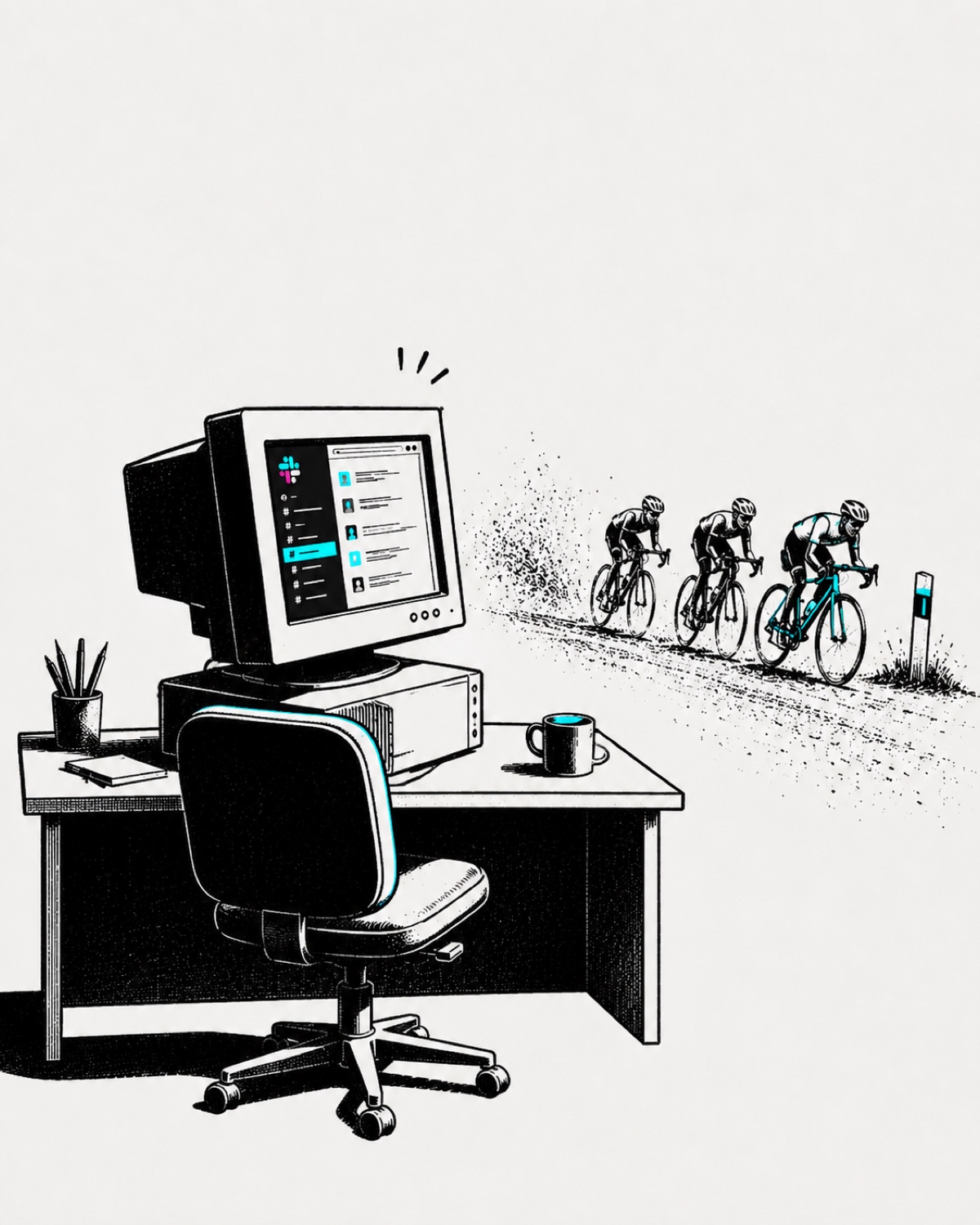
I am writing this from a desk inside a corporate job. The desk is in a building. The building has a logo on the door. Twenty minutes ago I opened a document somebody needed me to look at, made three suggestions, sent it back. On the fifteenth a certain number will appear in my checking account, and on the thirtieth a slightly smaller version of that number will appear again. This has been the shape of my life for several years now and I find, to my mild surprise, that I am grateful for it.
I want to be careful here, because the move I am about to make is one I am suspicious of in other people. The testimonial about how much you respect freelancers, delivered from a person with health insurance and a 401(k), has the structural shape of a man on a yacht waving sympathetically at a man treading water. I would like not to be that man. So let me say the truer thing first, which is the thing it has taken me a long time to be willing to write down.
I think the freelancers might be doing it right.
I am not being rhetorical. There is a creative director and photographer named Justin Diamond who I met biking, the way people in Los Angeles meet each other, on a road somewhere on the west side at six in the morning. He makes things. That is the most accurate way to describe it, because he does not do one job. He directs, he shoots, he art-directs, he builds the visual world a brand lives inside. The work is, by any honest accounting, the kind of work the rest of us look at and feel a small private adjustment in our chest. We ride together and we talk about art and design and the small mechanics of how a frame holds your eye, and we also, with some regularity, look at a campaign some agency made for some company and agree, with the easy confidence of two people who were not actually hired to do it, that we would have absolutely crushed that one. The campaigns in question are usually fine. We would not, in fact, have done them better. This is one of our favorite running bits and I am aware, as I write this, that it is also a small load-bearing pillar of our friendship. What I have come to understand over the course of those rides is that Justin and I are not quite having the same conversation. He is talking about his life. I am talking about a hobby. I am, in the most accurate phrasing I can find for it, microdosing creativity with him. He is on the full dose.
I want to pause here and name something before someone else names it for me, which is that putting Justin’s name and my name in the same paragraph, on the same subject, is on its face a little ridiculous. He is a working creative director whose images do something to a viewer that takes most people a lifetime to learn how to do, if they ever learn at all. I take pictures on my phone. I have opinions about composition that I have, on occasion, said out loud in his presence, which is roughly equivalent to a person who has read one book about cardiology offering surgical notes to a cardiologist. I am aware of the asymmetry. I am writing this essay anyway, because the asymmetry is the point. The reason I am the one writing the essay and not Justin is that he is doing the thing and I am writing about doing the thing, which is a much easier job and pays better and is, by every metric that matters to me on a Tuesday afternoon, not the same job at all.
The Essex study tells you what the full dose costs. It tells you that cultural freelancers, on average, are probably making less than twenty-five thousand a year. It tells you they are almost certainly not saving for retirement. It tells you that the administrative work of being a freelancer, the chasing of invoices and the negotiating with clients who want to use the photographs for something the contract did not cover, is eating hours of the week that I do not have to spend on anything. Now, in fairness to Justin, he is almost certainly outperforming the study’s median, and I know this because he has bought me coffee considerably more times than I have bought him coffee, which is the kind of unscientific data point that nevertheless contains a lot of information. But the shape of the study still matters. It is the gravity Justin is working against. He is doing well in a sector where the structural conditions push most people toward not doing well at all, and the doing well requires a kind of sustained effort that nobody in my office has to make to keep their seat at the table.
There is a phrase in the freelance world, used half ironically and half not, about the trade between time and money. Salaried people, the saying goes, sell their time. Freelancers sell their work. The implication is that the second kind of selling is purer. I used to think this was a romanticism, the kind of thing freelancers told themselves to feel better about the bad months. I am no longer sure. There is a way of doing what Justin does in which the work and the life are not in tension with each other. The work is the life. The bike ride is the location scout. The friends are the subjects are, eventually, the clients. It is one circuit, and the current that runs through it is the same current.
I could not do this. I want to say that plainly. It is not that I tried and failed. It is that I looked at the version of myself that would have been required to do it, the discipline, the tolerance for uncertainty, the willingness to be told no by twelve people in a row and ask a thirteenth, and I knew, with a kind of clarity I did not enjoy at the time, that I was not built for it. I needed the floor. I needed to know that on the fifteenth a certain number would appear. I needed the boredom of a paycheck, which is one of the great underrated luxuries of modern life.
So I made a different deal. I took a job where I would do creative work for someone else, in exchange for the floor, and I would do the other kind of creative work on weekends and on planes and in the small windows of the early morning. I would split the shape of my life in half. The paid half would be one thing. The real half would be another. The two halves would talk to each other politely at parties but would not, in any structural sense, be the same life.
I do not think this is selling out. I have thought about the phrase a lot and I have decided that the moral framework it comes from was built in a different economy. It was built before the cost of a one-bedroom apartment in any city where art is actually made hit four thousand dollars a month. It was built before health insurance became a thing you could either have or not have in a way that determined how long you got to live. It was built when the floor was, if not high, at least solid enough that a young person could stand on it for a few years without falling through. The floor is no longer solid. The Essex study is, in a way, a document about the floor.
But I also do not think what I did is the brave thing, or the smart thing, or the thing the kids in my graduating class should aspire to. I think it is just a thing. It is a thing that worked for me because of the specific shape of my nervous system, which prefers the predictable bad day to the unpredictable good one. The people who took the other path, the Justins, did not fail to make my choice. They made a different and harder one. They chose to keep their life in one piece. The cost of keeping a life in one piece, when you are an artist in 2026, is the cost the Essex study documents in three hundred pages.
I think about this on the fifteenth of every month. The number appears in the checking account and I feel the small relief of it, the body-on-the-savanna relief of knowing that food is coming. And somewhere in the middle of Kansas, in the dust of a gravel race called Unbound, Justin is on the side of a road with a camera in his hands and a few thousand riders streaming past, and he is documenting it because that is what he does, and he is doing it for a client or for himself or for some combination of the two that nobody outside the work could explain. He did not get a number today. He will not get one tomorrow. But the thing he is doing, the thing he is doing right now, this minute, is the thing he would be doing whether anyone paid him for it or not. I cannot say that about most of what I did today.